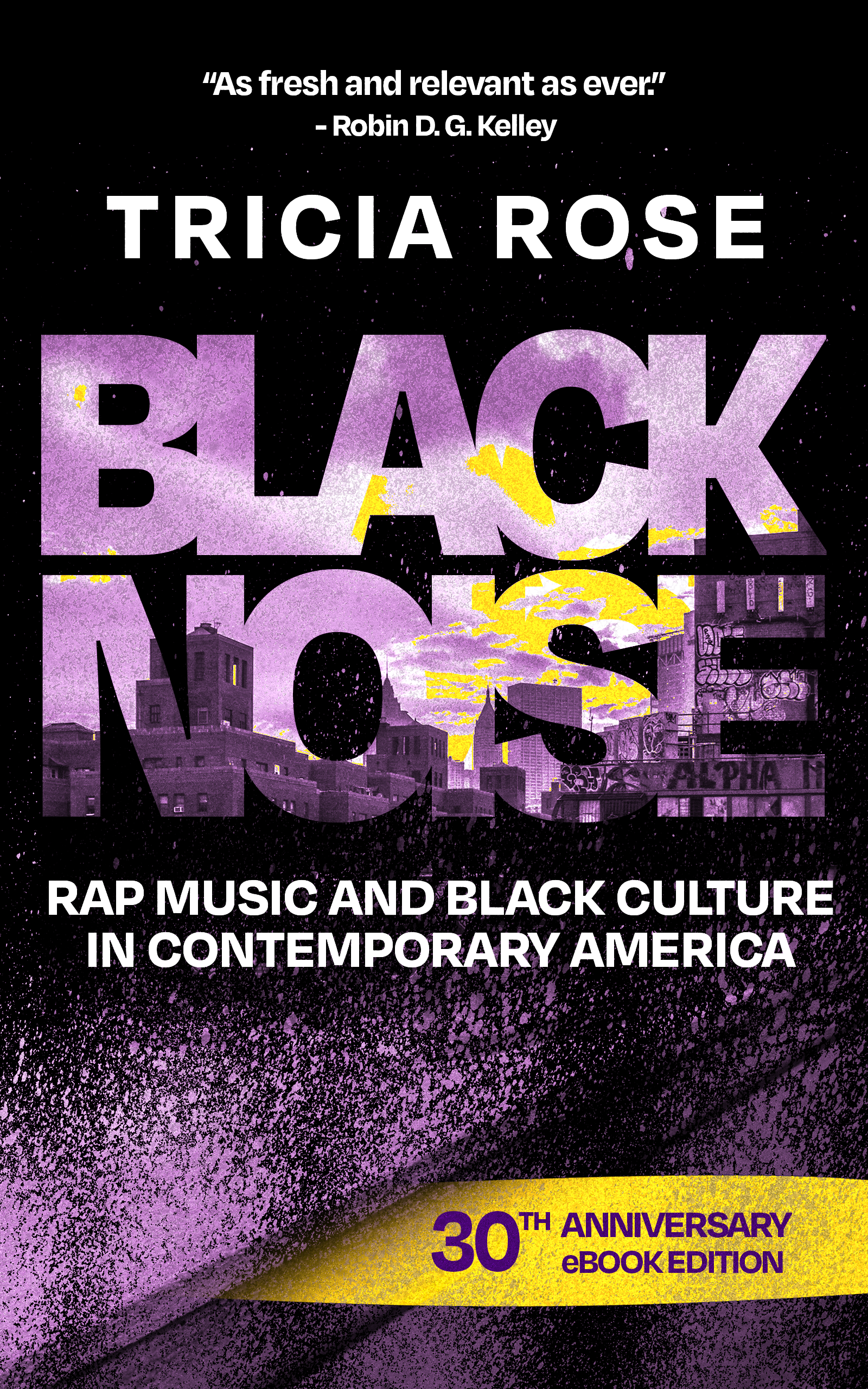

Black Noise
30th Anniversary
eBook Edition
The 30th Anniversary eBook Edition of Black Noise: Rap Music and Black Culture in Contemporary America is available exclusively as an ebook featuring integrated access to all songs referenced in the text.
When Black Noise: Rap Music and Black Culture in Contemporary America by Tricia Rose hit the shelves in 1994 it sparked the birth of hip hop studies and set a new standard for the scholarly study of Black popular music. As Marc Lamont Hill has remarked, “There is hip hop studies and Black studies before Tricia Rose and after Tricia Rose.” With radical cross-disciplinary acumen and groundbreaking insights, Black Noise indelibly transformed how rap music, its musicians and the conditions under which they live and create their art are revealed and understood.
Black Noise 30th Anniversary eBook Edition is as sharply incisive and relevant as ever. It includes all original text and contains exclusive new content available in digital-only format, including:
Critical Author Reflection. In her inimitable voice, Tricia Rose challenges readers to reassess the current realities of hip hop study and culture, and challenges us to re-envision and reclaim the collective values and practices that defined hip hop’s Golden Age.
Insightful commentary by other distinguished scholars. Marc Lamont Hill, Robin D.G. Kelley, George Lipsitz, Nasir Marumo, and Andre C. Willis. These wide-ranging pieces trace the impact of Black Noise across decades and disciplines, examining how the book and its arguments radically reshaped the exploration and understanding of the relationships between Black music, sound, economics, technology, gender, race and popular culture. They also speak to the influences of Black Noise upon their own work and how generations of scholars, artists, and activists worldwide have been inspired by it.
Integrated Media Access. Allows readers to engage directly with the music discussed in the text, creating a more sonically immersive and analytically rich reading experience—one that connects critical insight with the sound and texture of the music itself.
Praise for Black Noise after 30 years
-
“Tricia Rose’s Black Noise is an undisputed classic in modern scholarship and American letters! Her powerful book set the framework, tone and vibe for subsequent treatments of the most significant development in global popular culture of the last 50 years: Hip Hop music, dance, graffiti and style! This edition includes all 170 musical references in the text as well as many of the most important scholars who have engaged Black culture and music in our time. This edition is a majestic gift to us in such a grim and dim moment!”
— Cornel West -
"Rose shook the ground with Black Noise in 1994, calling a field into existence and making rigorous work in the history and rhythms of Black popular culture possible."
— Brittney Cooper -
“The publication of Black Noise was a huge deal. It both took seriously a genre of music that was being diminished, and it set the stage for scholarship on what would become the most popular musical genre in the world. By definition, it was groundbreaking work. And it was risky work. There was no certainty that academics would recognize its importance. It is a testament to Tricia’s intellect and scholarly rigor that it was almost immediately understood to be an important work.”
— Imani Perry -
“From a scholar who has led an intellectually ferocious life with curiosity, love, and care, Black Noise turned up the volume on those muted and brought to the academy and beyond ‘a style nobody can deal with’—then and now.”
— akua naru -
"I've used that tattered copy [of Black Noise] not only in my own research, but in every iteration of the history of hip hop class that I've taught for the last decade with 9th Wonder. It is always one of the first books that I suggest students read when they express an interest in hip hop studies. I always find myself going back to Professor Rose's discussion of flow, layering and rupture. The book remains one of the most important theoretical contributions to our understanding of Black popular culture over the last 40 years, as well as a portal into this moment of Black digital culture. I can't imagine talking about hip hop at all without talking about Black Noise."
— Mark Anthony Neal -
“There would be no hip hop studies without Tricia Rose's Black Noise. Period. It is still widely taught and cited 30 years later, not just because it was the first, but because to this day it is still the best. Black Noise is groundbreaking. Tricia Rose is trailblazing. And we best be thankful.”
— Gwendolyn Pugh -
"She thought about hip hop not simply as an art form or a social critique, but as a totality. As a culture and a structure of capital accumulation, consumption, social reproduction; as original art produced out of a very specific historical, economic, political and spatial context. In other words, she was looking at the world of hip hop and hip hop in the world. Tricia brought all of it together in an organic and illuminating way."
— Robin D.G. Kelley -
"Black Noise is not just a seminal work of scholarship, it's a seminal work of hip-hop culture—as foundational and timeless as Style Wars, "The Message" or the baby freeze."
— Adam Mansbach
Tricia Rose on the origins of Hip Hop
“Worked out on the rusting urban core as a playground, hip hop transforms stray technological parts intended for cultural and industrial trash heaps into sources of pleasure and power.
Life on the margins of postindustrial urban America is inscribed in hip hop style, sound, lyrics, and thematics. Situated at the ‘crossroads of lack and desire,’ hip hop emerges from the deindustrialization meltdown where social alienation, prophetic imagination, and yearning intersect.”
- Black Noise
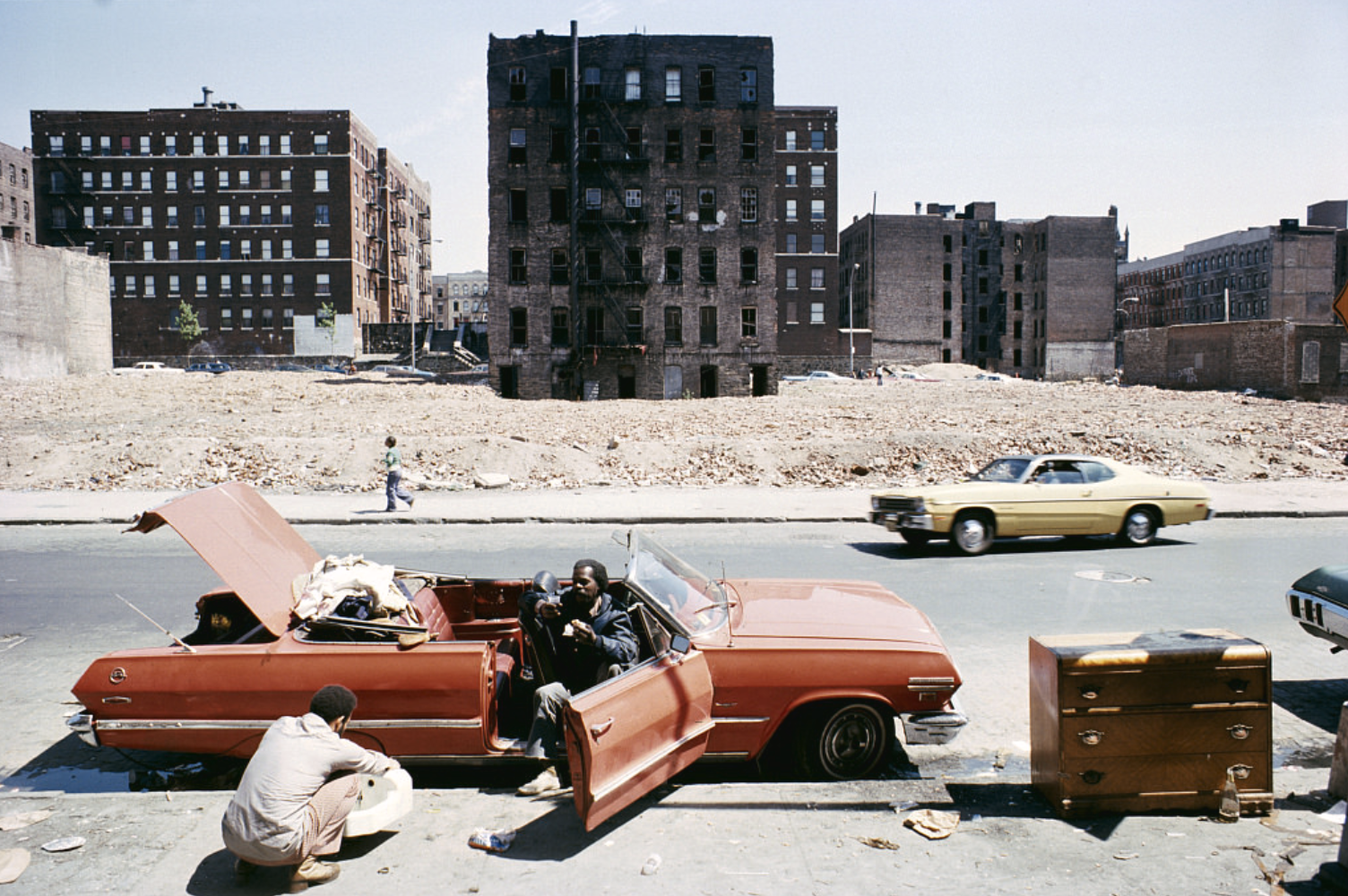
8 E. 140th St. at St. Ann’s, South Bronx, 1977

Cauldwell & Westchester Ave., Bronx, 1970

Young mother, E. 140th St. at St. Ann’s Avenue, South Bronx, 1977

Bronx Refrigerating Company, 520 Westchester Ave., Bronx, 1977

Burnt-out tenement blocks in the South Bronx, 1977.

Burnt-out tenement blocks and shops in the South Bronx, 1977.

Abandoned apartment buildings amid rubble with a stray dog in the South Bronx are shown, 1977.

Bronx River straddled by the #5 subway line, Bronx, 1970s
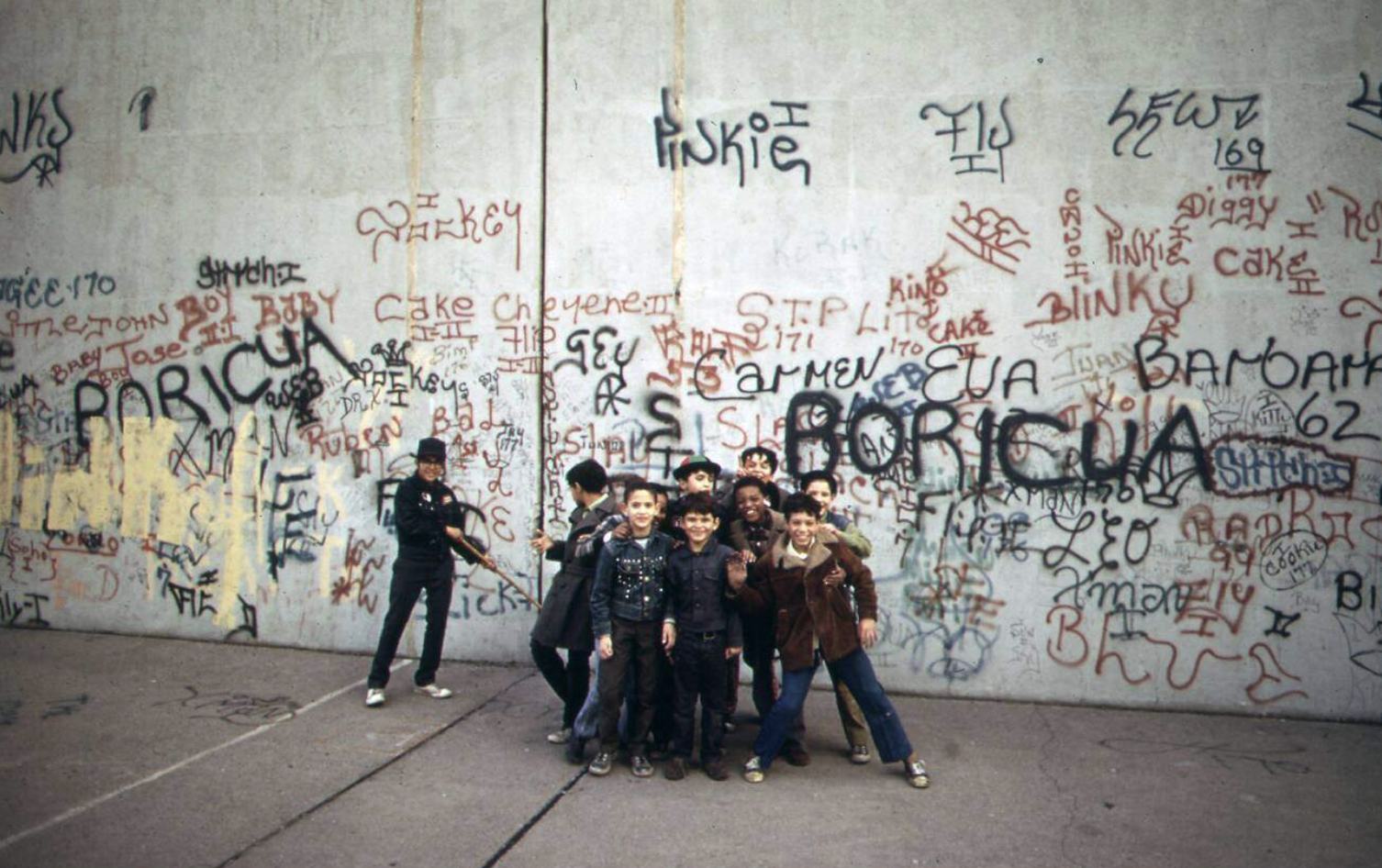
A Bronx sidewalk becomes a makeshift playground for children, 1970s
Tricia Rose on What’s Shaping Hip Hop Today
The following clips were taken from Tricia Rose’s keynote lecture at the “The Future of Hip Hop Studies” Symposium 2025 at the Hutchins Center for Africa and African American Research, Harvard University.
“...exactly what we don’t need! Un-self-reflective lack of vulnerability, and a penchant for violence…”
Media Oligarchy. Where’s the critique?
“So I want us to wake it up a minute and ask ourselves, can we push the field forward with a critical dialogue?”
Defend Hip Hop from Corporate America
“The point is to love Black people first. Then you ask about hip hop.”